Showing posts with label cotton. Show all posts

Thursday, October 8, 2020

Brazil: Single Line Cotton Harvester

 This week we highlight innovation created in Brazil to assist small farmers in cotton production. We encourage you to watch the video linked below and utilize the discussion points provided to guide your conversations around the globe.

Single Line Cotton Harvester

Discussion Points

  • In what ways does this new technology help farmers in Brazil? 
  • Does innovation have to involve technology? Explain. Does this look differently around the world?
  • Think about agriculture in your home area/community. What innovations could be developed to help small farmers, large farmers, and/or the agricultural industry?
  • What other innovations could you see as beneficial around the globe and outside of your local community/home area? Explain the need and potential benefits?

Friday, March 16, 2018

Agriculture and River Run

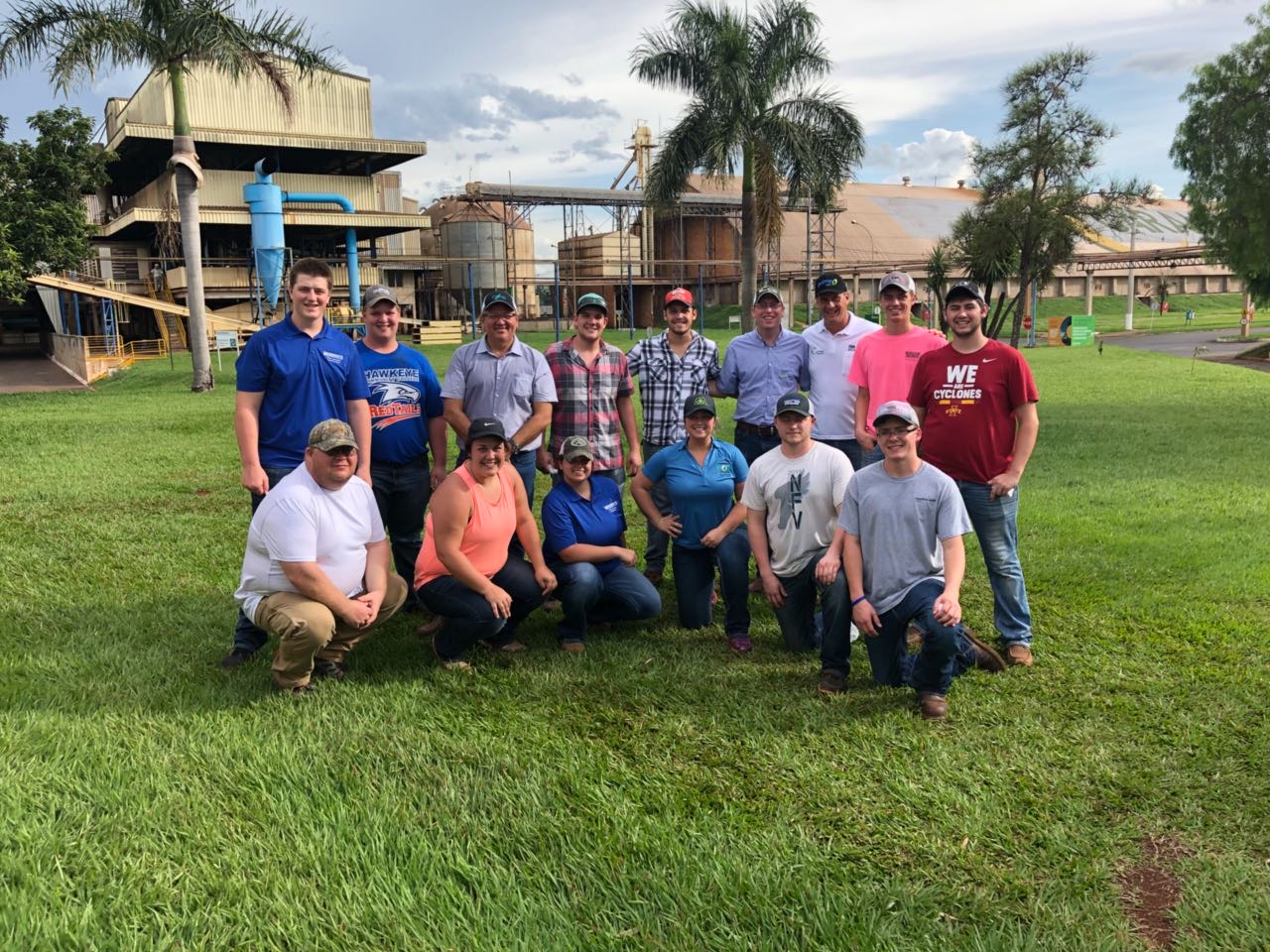
Today was our last full day in Brazil before we fly home tomorrow evening and return to Iowa on Sunday. We kicked off our day with a visit to a cotton processing facility. It is a family owned operation which grows and processes cotton so it can be shipped to clothing and material manufacturers in Brazil and around the world. We discussed the process from when it leaves the field to when it is shipped to manufacturers for production. After we learned about grading and all that goes into cotton production we made our way to the fields. We visited a cotton field that was planted in December and will be harvested in late May/early June. There was much discussion on production practices. Many were blown away be the intensive management of cotton which includes 26 passes of pesticides and 4 passes of fertilizers.

We enjoyed a traditional Brazilian lunch once again, which is a buffet style lunch with many options. Following lunch we visited Caramuru, a plant that processes soybeans and corn into many different products from corn meal to vegetable oil. The plant specializes in non-GMO soybean processing and sends a lot of that product to the Netherlands and Europe. The corn they work with is all GMO corn. They stated the premium for non-GMO soybeans is great and the reason for their procedures.


Following our hot day of touring we cooled off with boating and swimming in the river that separates the states of Goias and Minas Gerais. This was a relaxing way to end the day before enjoying a spectacular dinner with even better friends in Brazil! Tomorrow we will attend a field day in the morning before making our trek back home. There may not be another blog post until next week with two busy travel days ahead.

Friday, March 17, 2017

Muito Quente

Mutio quente is a good description of today. Muito quente is Portuguese for "very hot." Today was in the mid 90's as we learned more about Brazilian agriculture. We started learning about cotton production. We were able to visit a cotton producer who works with Bayer Crop Science to produce cotton seed for future crops. He shared production practices, challenges, and some of the equipment used. Most of our group is familiar with corn and soybean production so a lot was learned.


From the farm we traveled to visit a cotton processing plant that is Japanese owned. They sell the cotton (60% exported, 40% domestic), keep seed for future crops, and then utilize the rest of the seeds for livestock feed. We were able to see the procedure of processing cotton including grading. The processing plant, also, had a large fruit and vegetable area so we were able to explore different fruits and vegetables produced in the region.

After lunch we traveled to Caramuru, a corn and soybean processing plant. We began with the corn plant where they were processing corn. A majority of the corn is processed into corn meal for cooking purposes and human consumption. The plant was "muito quente" with all the equipment running in the heat of the afternoon. Following our time in the corn processing area we made our way  to the oil extraction facility. They primarily produce soybean oil (90% of oil production), but also work with sunflower, canola, and corn oil. While there primary product is oil for cooking they use all parts of the crops in some way, shape, or form. Their packaging facility was impressive with all the robots. They are able to produce 700,000 liters of oil in one day.


Back home many of our students head to the river on a very hot day. In Brazil things are no different. One of the agribusiness that is hosting us in this area offered to meet us as the river to cool off. We enjoyed conversations while swimming and boating. Today concluded with dinner where we enjoyed great food and live Brazilian pop music. Tomorrow we make a long trek back to Brasilia before catching our flight back to the states tomorrow night.

Thursday, January 28, 2016

GM Cotton Production in India

This week we take a look at an interview with Ganesh Nanote, a farmer from India. Ganesh explains production practices, trends, reasoning, and challenges facing agriculture in India, specifically around cotton production. I encourage you to read the interview conducted by Aneela Mirchandani and reflect with others using the discussion points below.

Profile of an Indian Farmer

Discussion Points

  • How are GMO's (genetically modified organisms) viewed around the world?
  • There is a big debate on seed technology and patents that go with them. Reflect on the following statement from the interview regarding seed freedom, "This is a question of the farmer's freedom to select his seed and access technology." What is your stance and why?
  • Ganesh does an excellent job of telling the story of how cotton production in India has transformed since the early 1990's. Explain this transformation and the advantages or disadvantages that have accompanied.
  • In countries where farmers have large plots of land they plant a percentage of non-Bt seed along side Bt seed to fight resistance issues. In countries were farmers have smaller plots of land this is not always possible. What are these farmers doing to combat resistance? Do you have any other ideas they could try?
  • Many argue that poor farmers cannot afford GM seeds due to the cost of the technology behind them. How does Ganesh respond to this? What is your view? Explain.
  • Explain how Ganesh equates farming and soil health to someones IQ and nutritional health.
  • What challenges are facing farmers in India according to Ganesh? Are farmers around the world and in your community facing these same challenges? What could be done to address these challenges in your opinion?