Showing posts with label Brazil. Show all posts

Thursday, November 5, 2020

United States Soybeans to Brazil

Many reports have shown that in May of 2020 Brazil overtook the United States as the number one soybean producing country in the world. With this being the case why is Brazil importing soybeans from the United States? The article linked below provides some answers. We encourage you to explore the linked article and utilize the discussion points to guide your conversations around the globe. 

Brazil-Bound U.S. Soybean Vessel Loading at Gulf Coast Terminal

Discussion Points

  • Why is Brazil turning to the United States for soybeans?
  • What did you find most surprising from the article and why?
  • Trade relations can have intended and unintended consequences that impact many around the globe. What are some examples within this article? 
  • What are the trade relations with your home country and the world? What do you see as the future?

Thursday, October 8, 2020

Brazil: Single Line Cotton Harvester

 This week we highlight innovation created in Brazil to assist small farmers in cotton production. We encourage you to watch the video linked below and utilize the discussion points provided to guide your conversations around the globe.

Single Line Cotton Harvester

Discussion Points

  • In what ways does this new technology help farmers in Brazil? 
  • Does innovation have to involve technology? Explain. Does this look differently around the world?
  • Think about agriculture in your home area/community. What innovations could be developed to help small farmers, large farmers, and/or the agricultural industry?
  • What other innovations could you see as beneficial around the globe and outside of your local community/home area? Explain the need and potential benefits?

Thursday, March 28, 2019

Embrapa and Brazil Agriculture

For those following our blog you noted that we spent a week and a half in Brazil recently. While in Brazil we visited Embrapa, an agricultural research organization. While at Embrapa they shared a video, linked below, that tells a little bit of the story of agriculture in Brazil and Embrapa's role. We invite you to watch the video and utilize the discussion points to guide your conversations around the globe.

Science and Agriculture

Discussion Points

  • What information from the video surprised you and why?
  • In your home country do you have a system similar to Embrapa? If so, what is the organization/structure? If not, is there a need for a similar organization/structure?
  • Towards the end of the video several areas are mentioned to help face the challenge of feeding nine billion people by 2050 (precision agriculture, nanotechnology, genetic engineering, green chemistry, etc.). Of these areas mentioned in the video which do you feel will be the most useful practice/technique to help feed nine billion by 2050 and why?

Friday, March 22, 2019

Brazil Agribusiness and Irrigation

Today was our final full day in Brazil. We started the day at UnB with a presentation on Brazil Agribusiness. From there we made our way to the largest irrigation area in Brazil for producing crops. We were able to discover the techniques of irrigation crop production. Following our time at the farm they welcomed us to a BBQ and we celebrated a birthday as well. Here is today's video recap.


Thursday, March 21, 2019

Pirenopolis Paradise

Today we had a great day hiking and swimming at Pirenopolis. It was a refreshing day in the natural spring waterfalls. After lunch we explored the historic town before making our way to Brasilia which will be our home base until our departure Saturday evening. Check out today’s video recap.


Feed Production and Processing in Brazil

Wednesday we had a little later start due to a late Tuesday night return. We had a great visit to a feed processing facility. They grew their own crops and then built their own processing facility from scratch. We were also able to visit a retail farm store before enjoying lunch and pool time. Here is a video recap of Wednesday.


Tuesday, March 19, 2019

Dairy and Grain Production in Brazil

Today was a long, but great day! We started off at Piracanjuba learning about dairy production in Brazil. They provide hands-on training for all aspects of dairy production. We then made our way to a large soybean, corn, and wheat farm. We were able to ask many questions and learn about their entire operation. They had six combines operating in the soybean field we visited. Here is a video recap from the day.

Monday, March 18, 2019

Research and Taking to the Fields

Today was a great day diving back into agriculture in Brazil! We started off the day by traveling to Embrapa just outside of Goiania. This Embrapa location conducts research in a variety of areas including (but not limited to) rice, beans, cotton, soybeans, corn, and beef cattle. Our visit was focused on the Embrapa structure, tours of different labs, and then we took to the fields to learn about upland rice research.

Next we made our way to the Universidade Federal de Goias to enjoy lunch at the agronomy campus before heading to the main campus to search for monkeys. We were not very successful as we only found one monkey. Next we headed to an organic farm that also rehabilitates wild animals. We got to check out anteaters, edible flowers, fruit production, vegetable production and discuss organic production in Brazil. We concluded our evening with a steak dinner before returning to our hotel and the roof top pool to reflect on our day. See the video recap from today below.


Sunday, March 17, 2019

Relaxing Sunday in Brazil

Today was a great Sunday in Brazil! We started with a stroll in a local park, enjoyed much of our day hosted by Juarez and his family, checked out a soccer game, had some roof top time, and wrapped up the evening with dinner in yet another open air restaurant. Check out Sunday's video recap below!


Saturday, March 16, 2019

Field Day in Brazil

Today we enjoyed time learning about crop production at the Ceres Field Day near Intumbiara. We discussed topics from seed genetics to fertilizers and chemicals. Following our time at the field day we traveled to Goiania which will serve as our home base through Thursday. We capped off a great day with dinner together and great conversations around the pool on the rooftop. Here is a short video review of our Saturday in Brazil.


Friday, March 15, 2019

Not Going to Sugar Coat It: Today was spectacular!

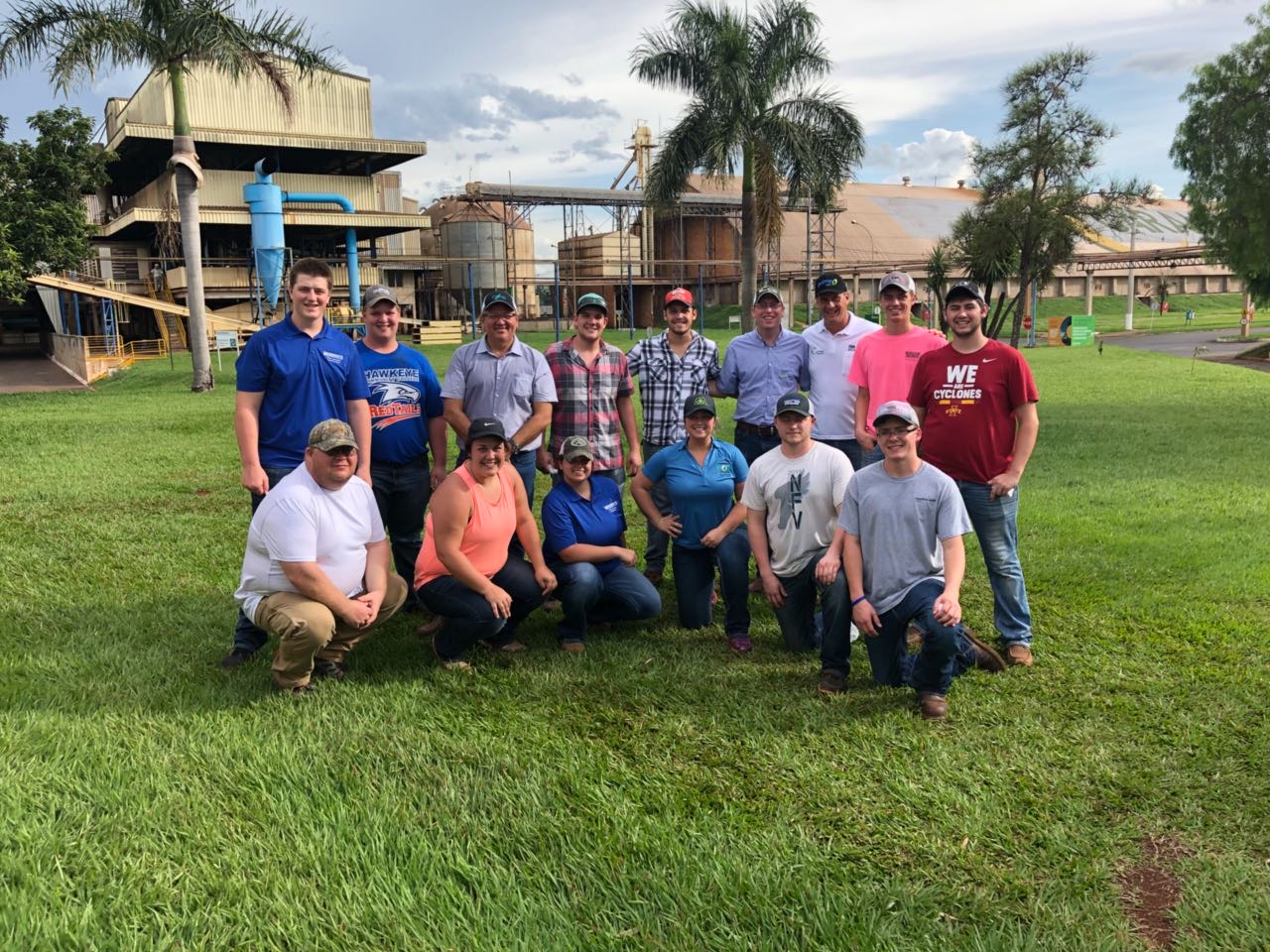
Today was a great first full day in Brazil! We took to the fields first thing in the morning exploring sugar cane production for sugar and ethanol. We then enjoyed a great lunch at a churrascaria before heading to Corteva in the afternoon. We wrapped up a great day with dinner with our friends from Brazil. Check out this video recap of the day!


Thursday, March 14, 2019

Next Stop: Brazil

We are on our way to Brazil! Over the next week and a half students from Hawkeye Community College and Joliet Junior College will embark on agricultural and cultural excursions and experiences in Brazil. We encourage you to follow our adventures on this blog as well as on Facebook, Twitter, and Instagram. Wheels up!


Thursday, April 5, 2018

Brazil: Ag Power

On our recent visit to Brazil we had the opportunity to visit the Ministry of Agriculture in Brasilia. We were able to learn about the products produced and agriculture practices in Brazil. There is no doubt that Brazil is a leader in agriculture and has great growth potential. We encourage you to look over the linked document that was shared with us in Brazil and utilize the discussion points provided to guide your conversations around the globe!

Brazil Agriculture

Discussion Points

  • As you look over the slides which slide surprised you the most and why? 
  • Brazil is a major agriculture player with the opportunity to expand. Explain why this is the case.
  • There is often a misconception that Brazil is destroying the environment. What is Brazil doing to protect and improve their environment? 
  • Compare agriculture in Brazil to agriculture in your home country/region. Are the crops and livestock similar/different? Trade relations? Trends? Environmental laws and protection? 

Saturday, March 17, 2018

Field to Flight

We will soon be in the air  on our way back to the USA. We have arrived at the Brasilia airport and are awaiting boarding. We started off our day at the Ceres Agrobusiness Field Day. We were able to visit with seed, fertilizer, and chemical companies about production practices in Brazil. One of the most intriguing sessions was a company creating fertilizers from ocean products, such as red algae. GALC was even highlighted by the local media with a video interview.


Following our time at the field day we packed up at the hotel and began our trek back to Brasilia. We have three flights ahead of us before returning to Waterloo Sunday afternoon. We’ve all had a spectacular time in Brazil, but look forward to seeing family and friends as we return to Iowa!

Friday, March 16, 2018

Agriculture and River Run

Today was our last full day in Brazil before we fly home tomorrow evening and return to Iowa on Sunday. We kicked off our day with a visit to a cotton processing facility. It is a family owned operation which grows and processes cotton so it can be shipped to clothing and material manufacturers in Brazil and around the world. We discussed the process from when it leaves the field to when it is shipped to manufacturers for production. After we learned about grading and all that goes into cotton production we made our way to the fields. We visited a cotton field that was planted in December and will be harvested in late May/early June. There was much discussion on production practices. Many were blown away be the intensive management of cotton which includes 26 passes of pesticides and 4 passes of fertilizers.

We enjoyed a traditional Brazilian lunch once again, which is a buffet style lunch with many options. Following lunch we visited Caramuru, a plant that processes soybeans and corn into many different products from corn meal to vegetable oil. The plant specializes in non-GMO soybean processing and sends a lot of that product to the Netherlands and Europe. The corn they work with is all GMO corn. They stated the premium for non-GMO soybeans is great and the reason for their procedures.


Following our hot day of touring we cooled off with boating and swimming in the river that separates the states of Goias and Minas Gerais. This was a relaxing way to end the day before enjoying a spectacular dinner with even better friends in Brazil! Tomorrow we will attend a field day in the morning before making our trek back home. There may not be another blog post until next week with two busy travel days ahead.

Thursday, March 15, 2018

Such a Sweet Day

Today was truly a sweet day. We spent the morning exploring sugarcane production and processing. We started our day in the fields where we had great discussions on production practices and were able to experience harvest. The gentleman that managed the sugarcane field that we visited has 37,500 acres of sugarcane. It was clear he was very innovative in his production practices. After harvest he has crews come in to analyze post harvest loss, stem lengths, and more to improve yields. The specific field we were in was on it’s 11th year of production. Most fields can go 6 or 7 years with the same sugarcane before it sees yield loss, but this field has been in production for 11 years with no drop in production due to soil nutrition and health management.


From the fields we made our way to a small, family owned sugarcane processing plant that produces sugar for consumption and ethanol. It was incredible to see all that goes into processing sugarcane to a finished product. Many were amazed by the amount of chemistry and steps to produce sugar and ethanol. We were even able to sample some of the finished sugar towards the end of the tour.

After we enjoyed lunch at a Churrascaria (meat feast), we made our way to a seed corn Pioneer production plant. We were able to discuss operations at the plant and tour the facilities. We had the opportunity to compare and contrast processes in the USA and Brazil. Much was the same, but there were several differences that led to engaging conversations. Many enjoyed some relief from the heat in the cold storage at the plant.

We ended our evening with a dinner where many enjoyed a monster of a burger and conversations with great friends from Brazil. We look forward to tomorrow which will be our final full day in Brazil.

Wednesday, March 14, 2018

Fun in the Sun

Wednesday we took a break from exploring agriculture to relax and have some fun. We spent the day at a hot spring water park. The water throughout the park is naturally heated by a dormant volcano. We had some thrill seekers who took their turns on the half pipe and piranha water slide while others opted for the lazy river and wave pool. No matter what direction you went you were sure to have an enjoyable day.


As our day concluded we loaded up the van and made our 1.5 hour trek to Intumbiara, where we will dive into agriculture once again. We closed out our evening at a pizzeria with Brazilian friends with Ceres Agrobusiness who have traveled to Iowa in the past to learn about agriculture.

A Day of Dairy, Corn, and Soybeans

Today was a spectacular day of exploring agriculture in Brazil. We started off our day visiting the Piracanjuba dairy training center. Piracanjuba is a dairy company that produces and sells milk, cheese, and other dairy products. This center provides training for employees of dairy farms selling milk to Piracanjuba and also sends advisors out to farms to improve production. Students enjoyed comparing production practices in the USA to Brazil. One of the surprising challenges that Brazil is working to address is their high somatic cell count.

After lunch we visited a soybean and corn farm. The most common production practice is soybeans as a first crop followed by corn as a second crop. With irrigation they are starting to produce tomatoes, sweet corn, or edible beans as a third crop. This year they are going to follow the second crop with an African grass grazed with beef cattle in half of their fields. The grass helps reduce compaction in the fields. We were able to see harvest (soybeans) and planting (corn) within the same field in the same day. To end our time at the farm we visited second season corn crop that was 120 day maturity that was 7-8 feet tall after just 52 days of production.  It was an eye opening experience for all once again comparing production between our two countries.


We ended the evening at the hot springs pool at our hotel in Caldas Novas. We enjoyed an evening of conversation and reflection on the day at the pool and enjoyed dinner poolside. Unfortunately, our WiFi has not worked the best which is the reason for this late post. 

Tuesday, March 13, 2018

Agriculture Diversification in Brazil

We had an awesome day of learning on Monday! We jumped right in with a visit to Embrapa. Embrapa is a governmental research agency that is all across Brazil. This specific location specializes in rice and edible beans, but is becoming more diversified in it’s research with cotton, maize, soybean, beef cattle, and dairy cattle. We started our day with an overview of Embrapa before moving to their gene bank, which stores around 47,000 different varieties of rice and beans. We enjoyed visiting their greenhouses where they were raising rice and beans for the bank as well as a visit to a cotton research area. As we finished our morning at Embrapa we traveled with them to their nearby feedlot to learn about beef cattle production. Nellore is the breed of cattle that are popular in Brazil as they are breed to tolerate the heat.


For lunch we made our way to the UFG campus where classes will be starting Tuesday. Following lunch we toured the agriculture campus and made a stop in to the coffee lab where we learned more about roasting coffee beans and sampled some fresh product. Any visit to UFG is not complete until you find the monkeys roaming central campus and today certainly did not disappoint.

Late afternoon we traveled to Fazenda Organica Novas Senhora Aparecida. This is an organic farm that produces a variety of crops including: corn, soybeans, peanuts, bananas, papayas, coffee, etc. The farmer is very innovative in his production techniques and puts an emphasis on education opening his farm to other producers and university students. Along with his crop production he also has a wildlife rehabilitation center that works with all animals except pumas and snakes. We were able to visit some of the blue macaws he was working with.

We rounded out the day with a great steak dinner and enjoying the weather poolside before preparing to head onto Caldas Novas tomorrow. There is no doubt there is major diversification of agriculture in Brazil and we will continue our exploration with a visit to a dairy and a corn/soybean farm on Tuesday!

Sunday, March 11, 2018

Family, Friends, Feasting, and Futbol

Today we enjoyed weekend living in Brazil. It was an eye opening experience for many as we learned more about culture in Brazil. It was noted by many the slower lifestyle exhibited by the Brazilians. It seems we are all so busy running from here to there back home. It was nice to reflect on the importance of spending time with others and enjoying life.

We started out the day by making our way to a local park where many sampled fresh coconut water and took in the beautiful scenery. After a short walk we loaded up and headed to Juarez’s place where we enjoyed an afternoon of  visiting with our Brazilian family and friends. Today was once again a day of feasting. At Juarez’s we enjoyed a full meal featuring Feijoada. Feijoada is a traditional black bean stew which originally was a staple for slaves in Brazil. We cannot thank Juarez, Jeanne, and their entire family enough for welcoming us into their home.


After a relaxing afternoon we made our way to the local stadium to take in a futbol game. It was a heated soccer match between the number 1 and number 2 teams in the region. We became fans of Club Goias as this is Juarez’s team. It was a very entertaining match with enthusiastic fans on both sides. Unfortunately, Goias lost 1-0 to Athletico. Following the soccer game we headed to Madero’s home of the “worlds best burger.” We all put this slogan to the test. The verdict is still out on this claim.

We are now reflecting on our time in Brazil at the rooftop pool. We look forward to diving back into agriculture tomorrow with tours of Embrapa, UFG campus, and an organic farm.